Monday, December 11, 2023

Who's Winning in Ukraine?


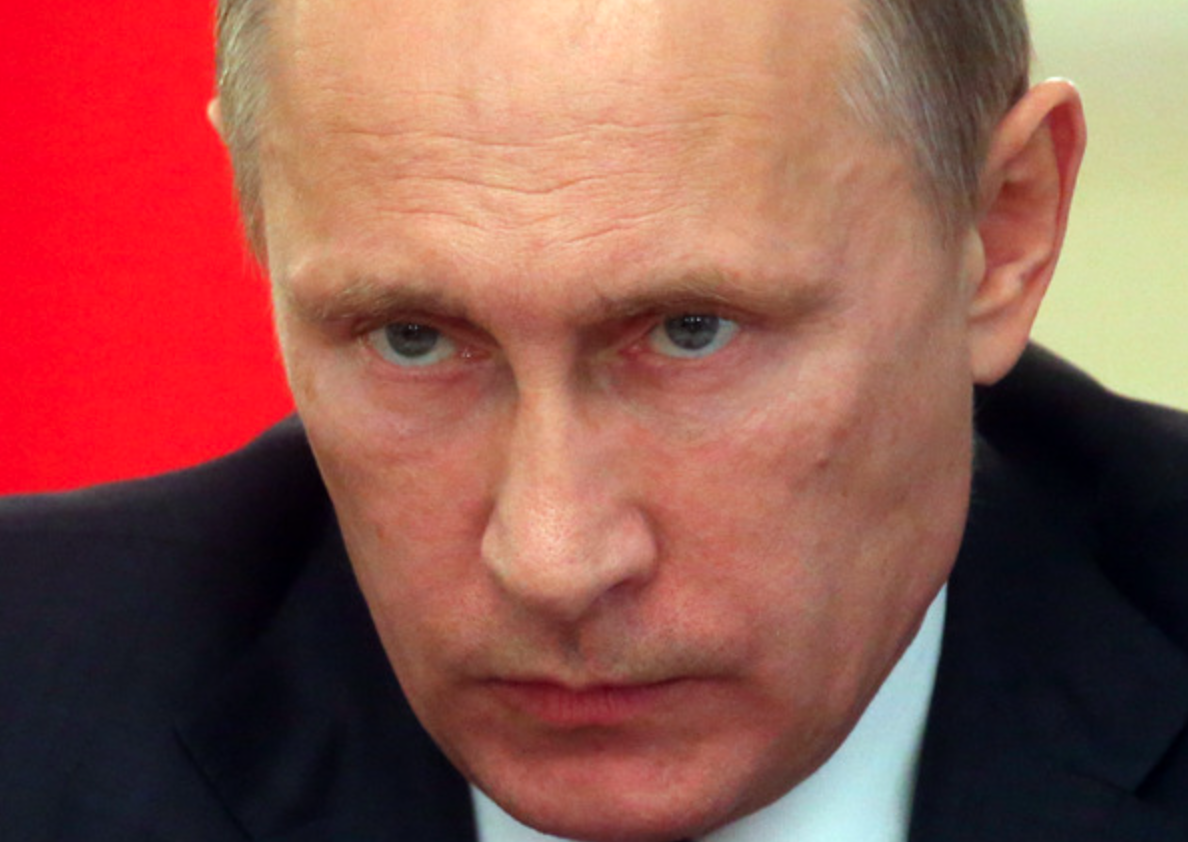
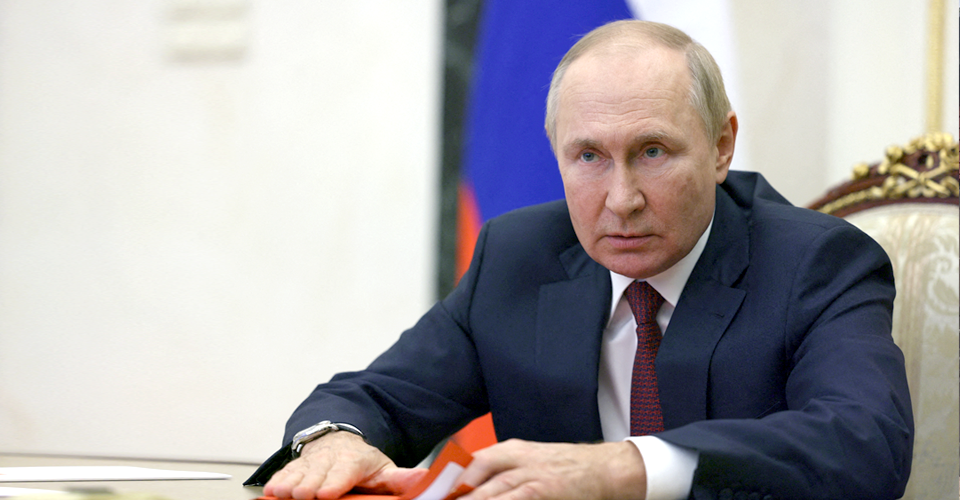
Beyond the number of troops, tanks, missles, and military leadership, much of what now happens in Russia's invasion of Ukraine will depend on Vladimir Putin, President of Russia, related to "ideology and political culture on the one hand and political stability and regime legitimacy.", writes Alexander J. Motyl--professor of political science at Rutgers University-Newark and a specialist on Ukraine, Russia and the USSR, on nationalism, revolutions, empires and theory--in an excellent article on what factors are important beyond the military balance between Russia and Ukraine.

What it boils down to is that "...many of Putin’s recent public appearances range from incoherent to embarrassing: They contrast hugely with the self-assured, even arrogant, style of his earlier performances. Today’s Putin is a weak, bloated, and uncertain man who was shocked by Yevgeny Prigozhin’s attempted coup and didn’t know for days how to respond, perhaps because he understood that the run-up to the coup could not have escaped the attention of the secret police, which did nothing to nip it in the bud. Can such a Putin lead a vast country and conduct a war successfully? The question is at least open."

Sunday, November 26, 2023

Putin's Ukrainian Genocide


"Those who are currently calling for a ceasefire in Ukraine must take the genocidal nature of Russia’s invasion into account. Putin has made it perfectly clear that he intends to wipe Ukraine off the map of Europe. He views Ukraine’s very existence as an intolerable threat to Russia itself, and is prepared to pay almost any price to remove this threat by extinguishing Ukrainian statehood. His uncompromising stance is entirely in line with centuries of Russian imperial policy.

Since the start of the full-scale invasion, Putin has demonstrated his willingness to sacrifice Russia’s international standing, along with the lives of hundreds of thousands of Russian soldiers, in pursuit of his messianic objectives. It is dangerously dishonest to suggest he can be appeased with the relatively small portion of Ukraine currently under Russian occupation. In reality, Putin would use any pause in hostilities to rearm and regroup before launching the next stage of his criminal campaign to destroy Ukraine.

Ignoring this imperial agenda will not make it go away. Instead, it is time to acknowledge that today’s invasion is not a conventional war with limited political goals; it is an attempt to complete Stalin’s unfinished genocide of the Ukrainian nation, and it will not end until Russia is defeated."

FROM...

Vladimir Putin is aiming to complete
Joseph Stalin’s unfinished Ukrainian genocide

Putin’s genocidal invasion of Ukraine echoes Soviet dictator Joseph Stalin’s earlier attempt to destroy the Ukrainian nation
by Paul Grod

ADDITIONAL READING...from https://hrsu.weebly.com/holodomor.html

Holodomor

   The term "Holodomor" refers to the mass murder of millions in Ukraine by the method of artificial famine from 1932-33. 
   In 1928, Stalin introduces a program of collectivization of agriculture, aimed at implementing the Communist ideal in real life. This collectivization process requested the farmers from all over the Soviet Union to give up their private land, livestock, and equipment to the state in order to form a large, state-organized factory-like agricultural system, called collective farms. Stalin believed that the collective farms would not only provide enough food for the industrial workers in the cities but also have a surplus for export. Many farmers did not want to give up their private properties, in their last act of resistance, many slaughtered all their livestocks and feasted on the night before they were to be collectivized. So great was the hate and opposition towards the state authorities that the defiant farmers would rather see their livestocks rot and go to waste than for the state to enjoy the advantage of them. 
  In 1929, many Ukrainian farmers still refused to join the collective farms. To crush their resistance, Stalin implemented the new policy of "dekulakization". Kulaks, or kurkuls, as their were known in Ukraine, were affluent or rich farmers. Stalin decided to wage a "class warfare" and liquidate the kulaks as a class. This policy was enforced by the regular army and the secret police (NKVD). Eventually all who opposed collectivization were considered kulaks. 
  In 1930, 1.5 million Ukrainians fell to dekulakization. Close to half a million were deported to gulags or labor camps in the extremities of the Soviet Union. 
  From 1932 to 1933, the Soviet government, in order to teach the Ukrainians “a lesson they would not forget” for resisting collectivization, and to deliver “a crushing blow” to any national aspirations of the Ukrainian people, started the Holodomor. First the government raised the grain production quotas of Ukraine to ensure that they would not be met. Then all grain produced in Ukraine were shipped to other parts of the Soviet Union. In summer, 1932, a decree called for the arrest or execution of any person found to be stealing or hiding grain from the fields in Ukraine, even a child for taking as much as a few wheat stalks. Military blockades were erected around villages to ensure no grain is smuggled in to feed the villagers or the starving villagers from leaving in search of food. Brigades of young activists were brought in from over the country to sweep the villages to search for any hidden grain. Thus, though grain production is actually increasing in Ukraine for the past years, an artificial famine is staged to starve millions to death. 
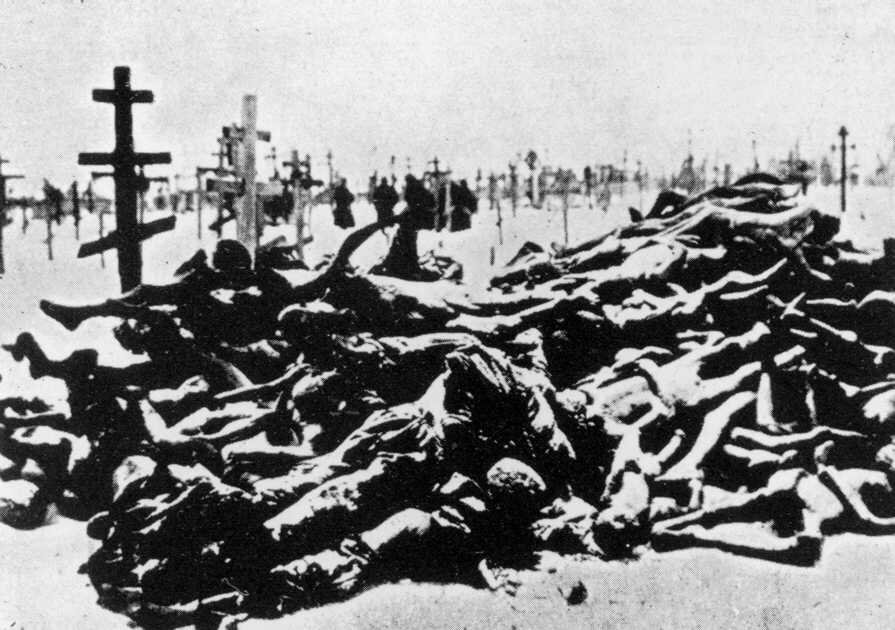
  In 1933, at the height of the artificial famine, the death rate was as high as 30, 000 a day. It is estimated that 7 million deaths occurred from Holodomor in 2 years, as compared to 6 million deaths from the Holocaust by the Nazis over a number of years. 
Picture
Bodies of the victims of Holodomor

Significance of Holodomor

  During Holodomor, the Soviet government denied famine and this was echoed by prominent Western journalists at the time, such as Walter Duranty. The Holodomor was not globally recognized until the late 1980s, when scholar on Soviet history Robert Conquest published a book named "Harvest of Sorrow". Holodomor is recognized as an act of genocide even though the Russian government still denies it to this day.

Wednesday, November 15, 2023

The Little Cracks in Russian Society will swell to Become a Greater Threat To Russia than Defeat in Ukraine

 From bne Intellinews...

Appalling from Russian society's point of view, is how far Putin is prepared to go to corrode Russian society in order to pursue grandiose imperialistic dreams.  That corrosion is apparent in countless small events in Russia that are becoming increasingly frequent.

As bne Intellinews writes briefly below, "one of those very unpleasant and frankly scary Russian stories" is Putin's pardon of Politkovskaya’s killer.

These little events will accumulate and eventually cause the collapse of Russian society.  Russia's defeat in Ukraine will be nothing compared to its self-inflicted defeat within Russia itself.

Logo
bne IntelliNews Editor's Picks --  Putin pardons Putin pardons Politkovskaya's killer

Putin pardons Politkovskaya’s killer

This is one of those very unpleasant and frankly scary Russian stories. Russian President Vladimir Putin has pardoned a Chechen, who was jailed for participation in the murder of famous human rights journalist Anna Politkovskaya.

She was gunned down in 2006 in front of her front door on Putin’s birthday in probably the most high-profile slaying of an opposition journalist. She worked for Novaya Gazeta, a leading liberal newspaper that has seen several of its staff killed.

She was also a vocal critic of Chechen President Ramzan Kadyrov and accused him of human rights abuses of which he is almost certainly guilty. And she died as a result. Indeed, there are a string of corpses in Kadyrov’s wake. Kadyrov has also been linked to the death of opposition leader Boris Nemtsov in 2015 and also a Chechen who was gunned down in a park here in Berlin in 2021. Many of the high profile murders in Russia seem to be connected to the Chechen strongman.

It is clear that Putin doesn’t have full control of him as he keeps shooting people he doesn’t like with impunity. For example, recently his son was filmed beating a man that disrespected Islam – and nothing happened to him.

This is the problem of adopting the “power vertical” as your political model, rather than broad-based democracy: you become hostage to some of your underlings. Putin can’t do anything about Kadyrov as he is holding the lid on a third insurrection in Chechnya, making Putin powerless as there is no way he will send troops there for a third time.

And if Kadyrov goes there is a good chance it will rise up again. There were rumours that Kadyrov had died last month (and he does look unwell, he has gained a lot of weight recently), but he survived whatever was wrong with him. There are also reports that his son was sent to Moscow and had a long interview with Putin. It’s widely assumed that Kadyrov is getting ready to retire and intends his son to take over.

Monday, June 19, 2023

How Geography Explains Russian Colonialism


A bit of history and geography to explain Russian colonialism, courtesy of Volodymyr Kukharenko.

And why Ukrainians are different than Russians:

“This is the soil fertility map. Most of European best soil is located in Ukraine, and also in Russia. The Russian fertile lands are actually those taken from other nations in conquests, even now a great part of the population there are Caucasian and Turkic nations, and some regions were populated by ethnic Ukrainians in the past. “Original” Moskowia did not have such lands when it started its conquests. 

“This is the answer to many questions. People that lived on the territory of Ukraine were farmers for thousands of years. This land could feed so many people that in pre-industrial times when agriculture was the main pillar of the economy Ukraine was one of the most populated lands in the world. This is why Persia, Alexander the Great, and the Romans could not take it. This is why in 1100 Kyiv was 4th largest city in Europe while Moskow was not yet founded. This is why people were always ready to defend their land because it gave them life and prosperity. Ukraine never had natural famines. And 48% of the world population now speaks Indo-European languages that started from the area which is now mostly Ukraine and Romania

“Moskovites (Merya tribe) were nomads and started farming only in 7th century at the earliest. The first metal tools found in their area are daring back only 2000 years ago, and most likely they started making their own metal tools 1500 years ago. So they just exited the stone age at the time when Kyiv was founded. And they did not have time to develop new agricultural traditions and culture, so they just tried to adapt their nomadic ways to new reality. And nomads do not need to develop own lands, they just use it, and also loot the farmers. A farmer can feed himself alone, a nomad needs a strong leader to survive. Farmers may fight with each other, to get more land and develop it. Nomads would just raid and rob, without investing in the development. And it does not matter that now the descendant of farmers and nomads are living in the 21st century, the habits remain even after the centuries. Russia now raids and robs Ukraine, and Moskow robs the provinces inside of Russia.

“Times have changed, and now the economy is defined not only by agriculture. But Ukraine feeds 10 times more people than its own population. Most of the Ukrainian crops go to North Africa and Asia. And if people there start starving, they will flock into European Union trying to save themselves. So the longer Russians are in Ukraine, the more people in Africa and Europe will suffer. And now, after they have destroyed the Kakhovka dam and ruined the irrigation in southern Ukraine, the food price will go up, as with the reduction of Ukrainian supplies.


Tuesday, May 23, 2023

How Russia staged fake anti-Ukraine protests in Paris, Brussels and The Hague (Le Monde)

Fake Pro-Russia Protests Across Europe

This video report from Le Monde (in English) is excellent and focuses on Russia's other war front, misinformation--persuading people to believe what is untrue in order to create chaos and disrupt its opponent's effectiveness (even when the opponent doesn't realize that it is in conflict with Russia or does not yet care about the issue).  

Video investigation: How Russia staged fake anti-Ukraine protests in Paris, Brussels and The Hague

Wednesday, May 3, 2023

Russia's Botched False Flag Drone Attack on the Kremlin


According to Russian sources, Ukraine attacked the Kremlin last night with two drones, allegedly targeting Putin's residence.  There are abundant videos of the attack on Twitter, Telegram, and other media platforms.

There are equally abundant reasons to doubt the story.  To begin, Russia has provided no evidence for the claim that the drones were Ukrainian or that Putin was the target.

At least one drone appears in videos to have hit the roof of a Kremlin building, doing minor damage.  What could Ukraine have hoped to accomplish with such a small explosive device--significant destruction or the assassination of Putin would have been highly improbable?

Equally improbable is the idea that Ukraine would have carried out the attack to signal to Russia the risk of a potentially more significant attack or to disrupt Russia's May 9 military celebrations.  What would be the point of an advance warning?  As with Ukraine's attack on the Kerch bridge or recent attacks on Crimean fuel depots, Ukraine does not do small demonstration threats.  Ukraine is conducting a war of self-preservation against a Russian invasion of its territory.

A curious feature of the drone attack, visible in the videos, is that there were two men on the roof at the time the building was hit.

What were they doing there?  Some commentators suggest these are security guards attempting to defend against the drone attack.  It seems, however, an ineffective way to counter a drone attack.  And, why are they on that building and not on other roofs visible in the videos?  Why didn't the drones activate the anti-aircraft missile batteries that are all over Moscow?  A possible and more likely alternative explanation is that these were security guards or firefighters pre-positioned on that roof to put out the fire from the staged drone attack before the fire did serious damage.  No FSB officer wants to be responsible for burning down the Kremlin.

If not Ukraine, then who?  Small provocations or diversions do suit the Kremlin's playbook.  The Kremlin often carries out small, containable acts of aggression to rally Russians around the flag as a prelude to greater domestic oppression or new attacks on foreign targets.

Most likely this false flag is to ensure that the Russian people do not question their leadership during the sensitive period of the May 9 military celebrations, many of which have been canceled this year--Kremlin and provincial leaders claim due to the security risk of Ukrainian terrorist attacks.

Expect more of the same rhetoric from the Kremlin in the coming days, as well as additional domestic oppression and, if that isn't enough to rally Russians, expect more serious Kremlin false-flag provocations.